In the Silence of Diagnosis: Where My Story Began
There is a particular kind of silence that fills a room when a family receives a diagnosis they were never prepared for. I have studied that silence in textbooks, observed it in clinical settings, and read it in the faces of research participants who trusted me with their most vulnerable memories. But before any of that, I lived inside it. I was two years old, and somewhere in that room, my parents were learning for the first time that their daughter’s blood did not clot the way it should. That silence, equal parts fear, confusion, and the weight of an unknown future, is where my story begins. It is also where my life’s work begins.
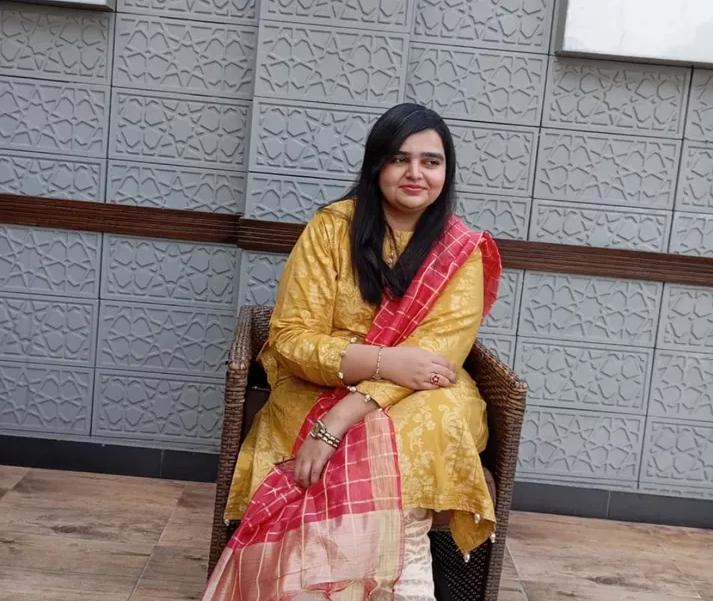
I am Midhat Khalid. I have Von Willebrand Disease Type II, and I am Clinical Psychologist. These two facts are not coincidental, they are inseparable. Every clinical insight I have developed, every research question I have pursued, every advocacy position I have taken has been quietly shaped by the experience of growing up in a body that demanded my full attention. Living with VWD did not just shape my character. It shaped my entire orientation toward human suffering and what genuine care actually looks like.
In clinical psychology, we speak often about the therapeutic relationship, the idea that healing happens not in isolation but in connection, in being truly seen. What strikes me now, years into my training, is that this is precisely what a diagnosis can offer when it is handled well. For the patient receiving it, a diagnosis is often the first moment of being genuinely seen, the first confirmation that what they have been experiencing is real, that it has a name, that it is not their imagination or their weakness. For many young patients I have sat with, that moment carries an emotional weight the clinical encounter rarely makes space for. My work is rooted in the conviction that it must.
During my research on the lived psychosocial experiences of youth with bleeding disorders, I found myself navigating territory that was professionally fascinating and personally confronting in equal measure. One participant described the years before her diagnosis as living in a body she could not trust. Another received his diagnosis not with relief but with dread because now it was real, now he had to tell people and watch their faces change. A young woman described hiding her condition through school, university, and early professional life, constructing an elaborate performance of normalcy while privately managing something that touched every part of her daily existence. I knew each of these emotional landscapes from the inside. And that knowing changed the quality of my listening in ways I am still learning to articulate.
What the research revealed, taken together, was both clinically significant and deeply human. The journey from diagnosis to care is rarely linear, it is interrupted by denial, shame, exhaustion, and the particular pressures placed on young women in a society that already asks them to be silent about their bodies. Many participants reported that the psychological dimensions of their diagnosis had never been formally addressed. They had received treatment for their bleeding. They had not received support for what the bleeding had cost them emotionally and socially. This gap is not incidental. It is structural. And closing it requires both clinical commitment and systemic advocacy.
Through my roles as Executive Board Member of HPWS, Executive Member of HFP, Youth Leader of the Lahore Chapter, National Youth Group Member, and women’s group representative at both chapter and national levels, I have witnessed how community transforms young people with bleeding disorders. Isolation begins to ease, and many, especially girls, realize that their bodies are not the burden; the systems around them are. This shift from silent patient to empowered individual is one of the most meaningful transformations I have seen, and it often begins with diagnosis.
A diagnosis does not define your limits, it opens the path to understanding, strength, and belonging.
What I understand now, standing at the intersection of lived experience and clinical training, is that a diagnosis of a bleeding disorder is not simply a medical event. It is a psychological turning point, a social reorganisation, and for many patients, a profound identity moment. How that moment is held, by physicians, by families, and by communities , determines so much of what follows. A diagnosis delivered with empathy, with information, and with connection to a supportive community can set a patient toward genuine wellbeing. A diagnosis delivered coldly or without psychological follow-through can leave a patient alone with a label and no map for what to do with it. I have seen both. I have experienced the aftermath of both in the stories of others and in the quieter corners of my own history.
This is what drives me forward, not ambition in the abstract, but a deeply felt responsibility. There are young people in Pakistan right now who have just received a diagnosis they do not yet understand, whose families are sitting in that same silence my parents once sat in, who need not only medical guidance but psychological accompaniment through one of the most significant transitions of their lives. My goal is to be part of the system that offers them that, a system where diagnosis is not the end of the conversation but the genuine beginning of comprehensive, compassionate care. Care that addresses the blood, the mind, and everything in between.
Diagnosis is the first step to care. I have spent my entire life learning what that means. I intend to spend the rest of it making sure others do not have to learn it alone. I share my story for those who are still sitting in that silence, so they know they are not alone, and that this moment, however heavy, can also be a beginning.
You are not defined by what your body carries, but by the courage with which you carry it.
Midhat Khalid
Clinical Psychologist|Executive Member- HFP | Youth & Women’s Advocate