I am a person living with severe hemophilia A in Korea, and a father of two sons and one daughter. When my daughter was born nine years ago, I would be lying if I said I had no concerns. Still, I chose to believe that, just as I had grown up striving to live a healthy and fulfilling life, she too would grow up healthy, pursue her dreams, and find happiness.
As expected, my daughter was born a carrier of hemophilia. Unlike me, she did not experience joint or muscle bleeding, but she frequently suffered from nosebleeds during her childhood. About a year ago, we decided to take a closer look at her condition through a blood test. Her factor VIII activity level was measured at approximately 19%. Based on this result, we began regular monitoring with medical professionals and focused on prophylaxis to prevent major bleeding events.
Earlier this year, while preparing for orthodontic treatment, my daughter needed to undergo multiple tooth extractions. Before the procedure, we conducted one more blood test, which showed her factor VIII activity had risen slightly to about 22%. While we were relieved to see an improvement, we also recognized the need for adequate prophylaxis to ensure her safety during the dental procedure. As a family, we made the important decision to officially register her as a patient with mild hemophilia.
This decision was not only about managing a single medical procedure. More importantly, it was about preparing her for life—ensuring she understands her condition, recognizes potential risks, and can respond proactively to bleeding episodes or unexpected accidents. Education and awareness, we believe, are just as critical as treatment itself.
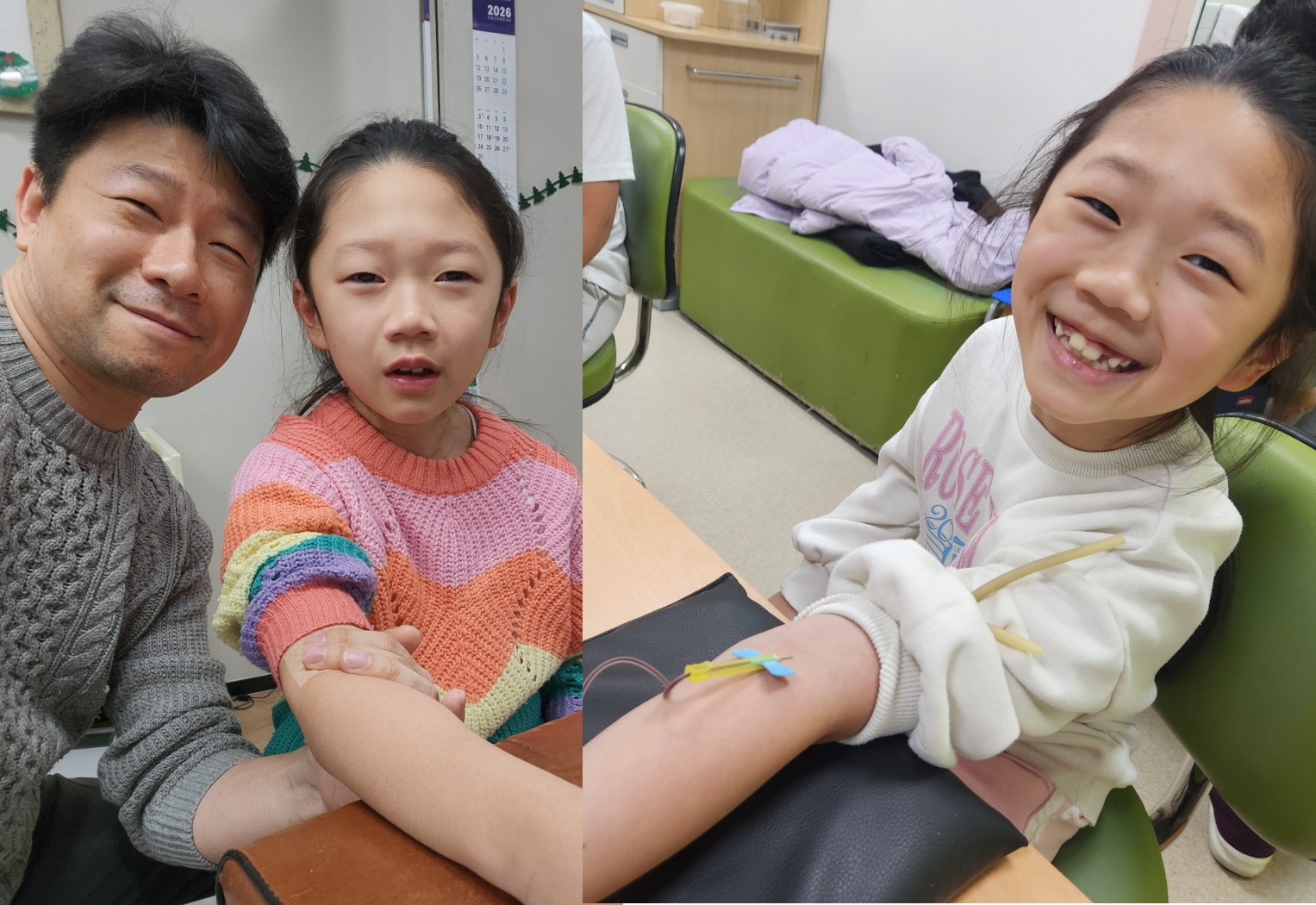
Fortunately, my daughter accepts haemophilia as a part of her life and approaches it with a positive attitude. The photo taken with me was from her first blood test a year ago, and the photo taken alone was after adjusting a little to the needle a few months ago. She has completed her extraction safely with prophylaxis and is living a healthy life. She does not need prophylaxis on all her usual days, and keeps factor products at home for treatment with bleeding or for breakouts. I’m asking my patient friends around to make sure his daughters are not late and have their blood tested and prepared for the appropriate response.
At the WFH World Congress held in April, there were many lectures, presentations, and discussions on women’s bleeding disorders. As I participated in it, I realized that female carriers or patients should no longer be in the blind spot of treatment. In Korea, social awareness or diagnosis of female bleeding disorders is not yet active. I think that when the efforts of the global community and our individuals combine, little by little will be made.
As a father, I hope that my daughter’s factor VIII levels may one day naturally rise above 50%. But even if they do not, I am confident that she will continue to live a healthy, fulfilling life. Together, we will face this journey with strength and optimism.
To all patients with bleeding disorders and their families around the world: we stand with you. No matter the challenges or barriers, I sincerely hope that each of you can move forward toward a life filled with hope, dignity, and dreams.
Thank you.